
5 Reasons Your Nano Extension Clients Don’t Come Back — And How to Fix Them
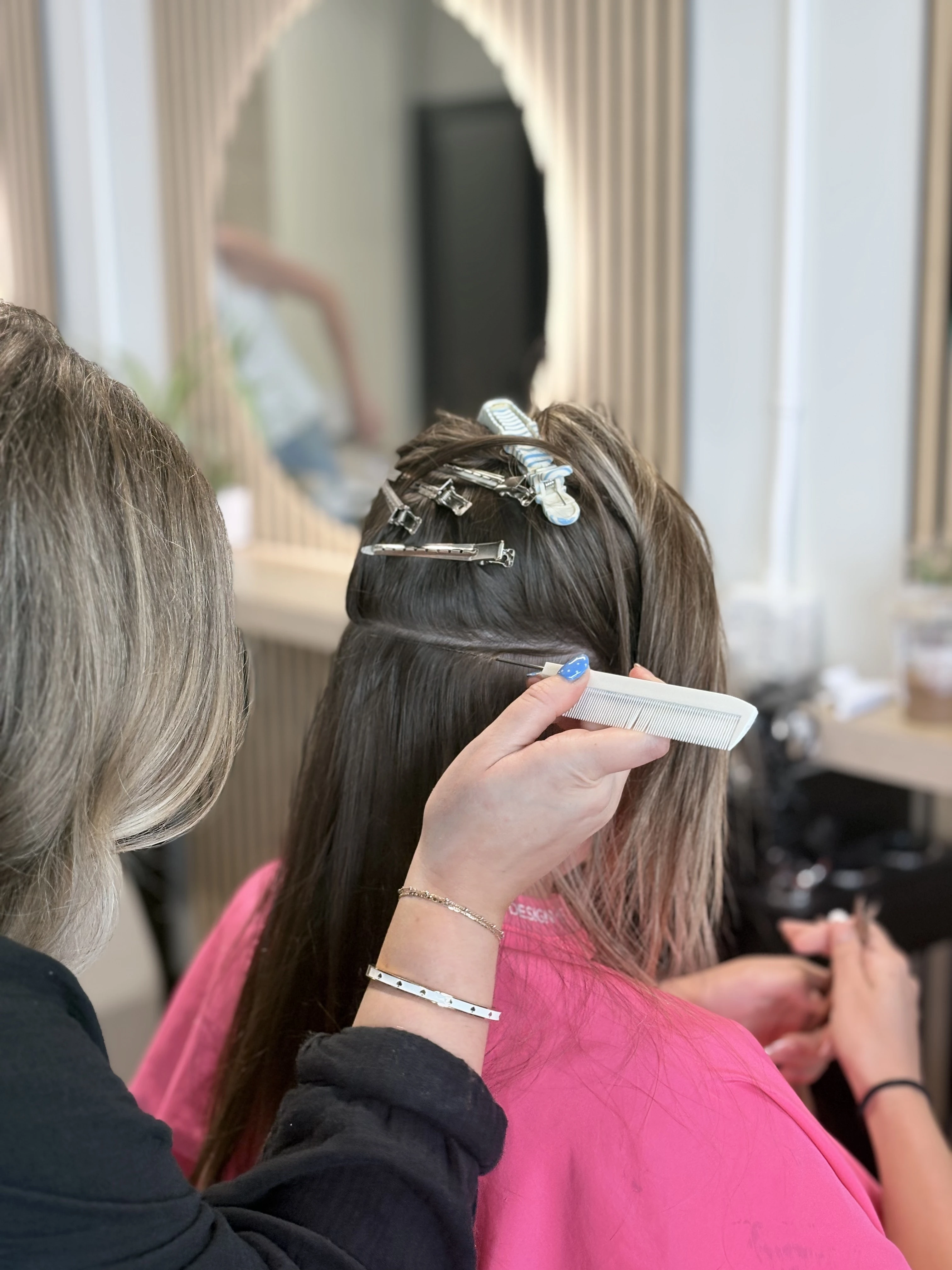
Strong technique keeps extensions secure, comfortable and predictable.
Placement needs to suit how your client actually wears her hair.
Follow-up and clear maintenance expectations help turn installs into repeat clients.
If you’ve ever had a nano client come in for an install and then never come back for maintenance, it’s easy to assume they just decided extensions weren’t for them, didn’t want to spend the money again, or were ready for a break.
But a lot of the time, there’s more to it.
I’ve been doing extensions for over 16 years, and there are a few really common reasons I see clients decide not to continue. The good news is that most of them are completely preventable.
With nanos, the client’s experience is about so much more than how the hair looks when they leave the salon. You want them to still be loving their hair six to eight weeks later when they come back for maintenance.
Here are some of the biggest things I see.
Excessive Fallout
Too many lost pieces quickly makes a client question whether nanos actually work.
Placement Problems
Technically correct placement still needs to work with the client’s everyday styling.
Discomfort
Extensions that pull, hurt or feel too tight can make a client give up on them completely.
The Result Fell Short
Density, colour, blending and expectations all affect whether the client loves the final result.
No Follow-Up
Without aftercare guidance and a maintenance plan, small issues can become reasons not to return.
1. They Lost Way Too Many Pieces
This is probably one of the biggest reasons, especially with newer nano stylists.
If your client is wearing her nanos for six to eight weeks between touch-up appointments, ideally she should only be losing a couple of pieces during that time.
Not 10. Not 20. Definitely not handfuls.
If she is constantly finding extensions in the shower, in her brush or around the house, she’s going to start questioning whether nanos actually work.
Most of the time, excessive fallout comes back to technique.
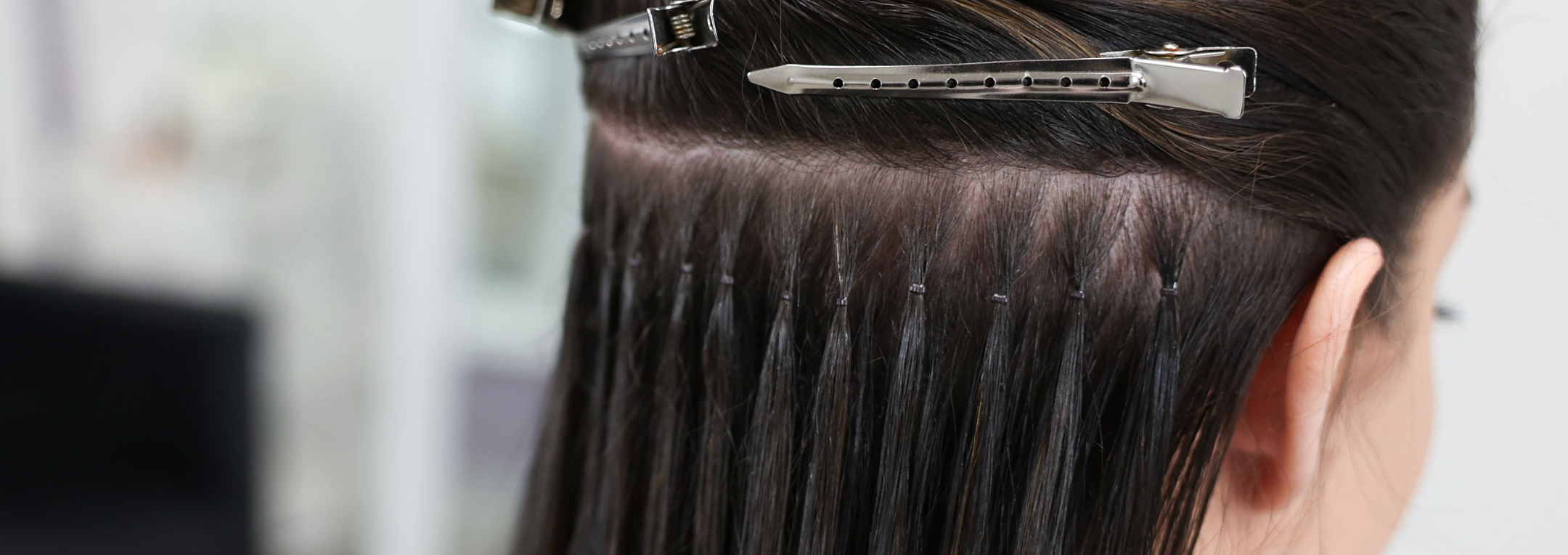
First, make sure you’re pulling enough of the client’s natural hair into each section. You need enough hair there to properly support the extension.
Second, make sure you’re clamping the bead firmly enough. In my salons and when I’m training, I always teach three strong, flat clamps on every bead.
I’ve been doing nanos for over 16 years and I still do three clamps every single time. Just keep your plier in the same position between clamps so you’re securing the bead without twisting or distorting it.
The client’s hair also needs to be properly cleansed before the install. Oils, conditioner or product buildup around the root can contribute to slipping.
And home care matters too. Make sure your client understands which products should stay away from the root and attachment area, especially heavy oils and masks.
For me, the real test of your installation isn’t how beautiful it looks the day you put it in.
It’s what that head looks like when the client comes back six to eight weeks later. If she comes back with almost everything still securely in place, that builds a completely different level of confidence in you and in the nano method.
2. They Weren’t Happy With the Placement
You can do a technically beautiful installation and still have a client who isn’t completely happy with the placement.
Remember, you’re placing the extensions based on how you think they’re going to work best while the client is sitting in your chair.
Then she goes home.
She washes her hair, puts it up, tucks it behind her ears, changes her part and starts styling it the way she normally would.
Sometimes there are just a couple of pieces that don’t work for her.
That doesn’t necessarily mean you did a bad install.
One of the nicest things about nanos is how quick and easy they are to pop out and reposition.
Especially when you’re newer, I really recommend texting your client a few days after her appointment and checking in.
“I’ve placed everything where I think it’s going to work best, but once you go home, wash your hair and start playing with it yourself, you may find there are a couple of pieces you want moved. If anything is bugging you, or you want more or less hair in an area, just let me know and we can adjust it.”
And I would absolutely make those small placement changes complimentary.
If it takes you 10 or 15 minutes to move a few nanos and now that client loves wearing her hair, that’s time well spent.
The goal isn’t just to have technically correct placement. The placement needs to work with the client’s real life and the way she styles her hair.
3. The Extensions Were Uncomfortable
This one is huge, and it doesn’t only apply to nanos.
I can’t tell you how many clients I’ve had come to me over the years and tell me they had extensions installed somewhere else that were so uncomfortable they removed them within 24 or 48 hours.
That is exactly the experience we don’t want to create.
Extensions should feel comfortable.
Of course, someone who has never worn extensions before may be aware that something new is in their hair for the first few days.
But pain isn’t normal.
Constant pulling isn’t normal.
A sore scalp everywhere isn’t something I would tell a client to just “get used to.”
One of the most common things I see with newer or improperly trained extension artists is that they install the extensions way too tight to the scalp.
There needs to be enough space for the client’s natural hair to move.
If you place that extension too tightly, you can put unnecessary tension on the scalp and the hair follicle — and your client is going to feel it.
This is also why I’m really big on checking comfort throughout the install.
Don’t wait until you finish an entire head to ask whether everything feels okay.
Ask as you work.
- Does anything feel tight?
- Any pulling?
- How does that row feel?
If something feels uncomfortable, fix it right then.
I would much rather take two minutes to reposition an extension while the client is sitting in front of me than have her go home uncomfortable and start thinking extensions just aren’t for her.
4. They Didn’t Love the Final Result
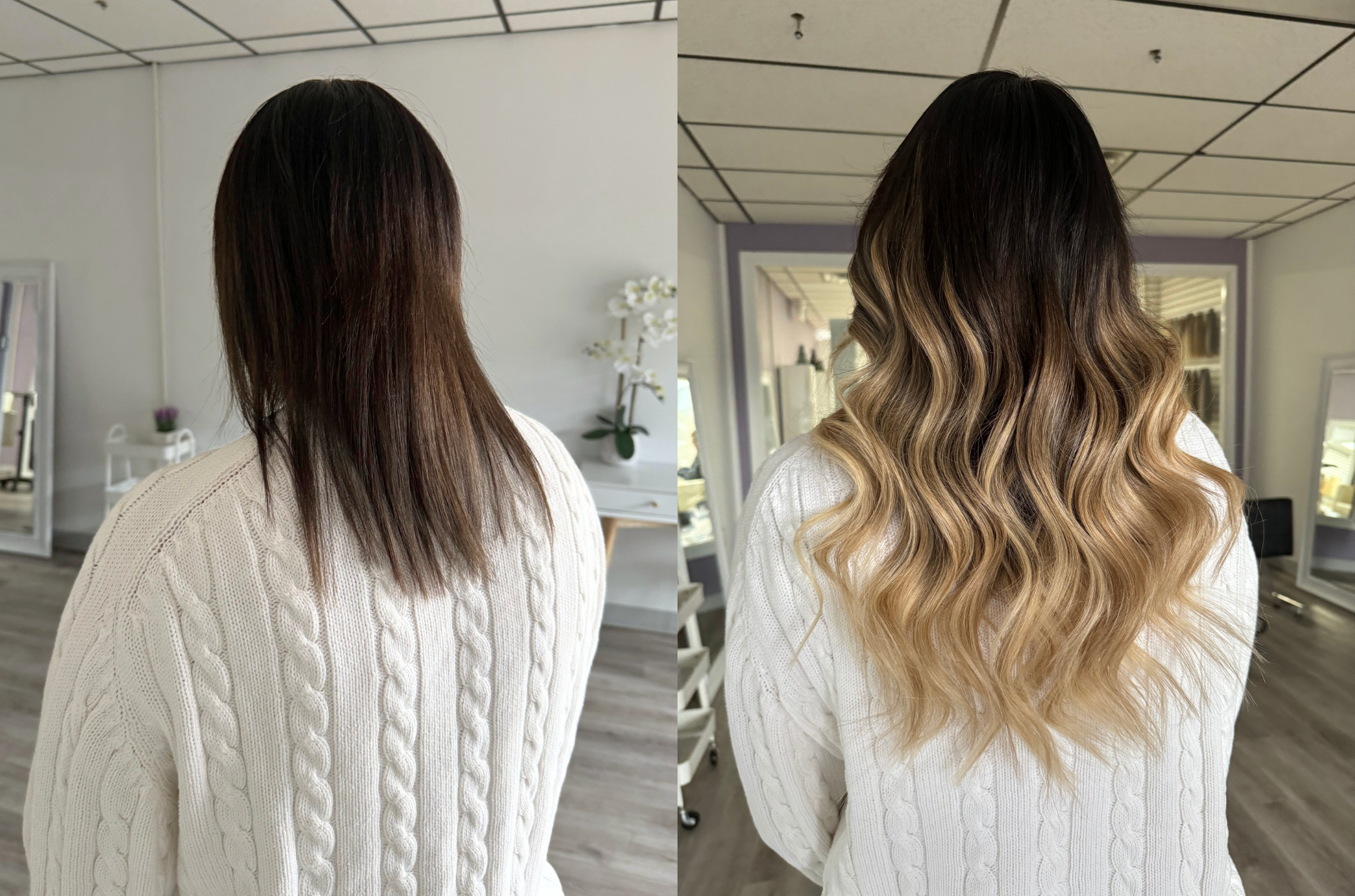
There is a big difference between a client thinking her extensions look good and a client absolutely loving her hair.
Sometimes the problem isn’t the actual installation at all.
Maybe you didn’t use enough hair to create the result she was hoping for.
Maybe the colour match was close, but it wasn’t dimensional enough to really disappear into her natural hair.
Maybe the hair wasn’t blended or cut properly.
Or maybe the client came in expecting a dramatic transformation and there wasn’t a clear enough conversation beforehand about what was actually achievable.
This is why the consultation is so important.
Before I start, I want to understand exactly what the client is trying to achieve.
- Does she want length?
- Thickness?
- Both?
- How does she normally style her hair?
- What does she actually want her finished hair to look like?
Then we need to recommend enough hair to create that result.
Trying to save the client money by using too little hair can sometimes backfire. If the extensions look thin through the ends or don’t blend properly, she may leave disappointed even though she technically spent less.
And once you’re finished, really look at the final result.
- Check the blend.
- Check the density.
- Check the colour.
- Cut and shape the extensions properly.
Then ask the client how she feels about it.
You want to catch that hesitation while she is still sitting in front of you, not after she has gone home.
5. There Was No Follow-Up or Clear Maintenance Plan
The relationship shouldn’t end when the client walks out of the salon after her first install.
Especially with a first-time extension client, she is probably going to have questions once she starts washing and styling the hair herself.
Make sure she knows when she needs to come back, what maintenance is going to look like, what she should and shouldn’t be doing at home, and what is normal versus something she should contact you about.
And ideally, rebook her before she leaves.
I also really like checking in after a first install.
It doesn’t have to be anything complicated.
“How is everything feeling? Are you loving the placement? Any questions now that you’ve washed and styled it yourself?”
That small touch can make a huge difference.
It also gives you the opportunity to fix something small before it turns into a reason that client decides not to come back.
A Final Thought
I hope these tips help you create a better experience for your clients and build a stronger nano extension business.
A lot of client retention really does come down to the small details — your technique, your placement, how comfortable the install feels, and how well you communicate with your client throughout the process.
And if you ever feel like you need help troubleshooting your installs, improving your technique, or you want more training, we’re always here to help.
That’s a big part of why we created Hair Flair education in the first place — to help stylists feel more confident, get better results, and build a business around extensions that actually lasts.
Contact Us